
#027 - What Does It Really Take to Save Twins With TTTS?


Hello friends 👋
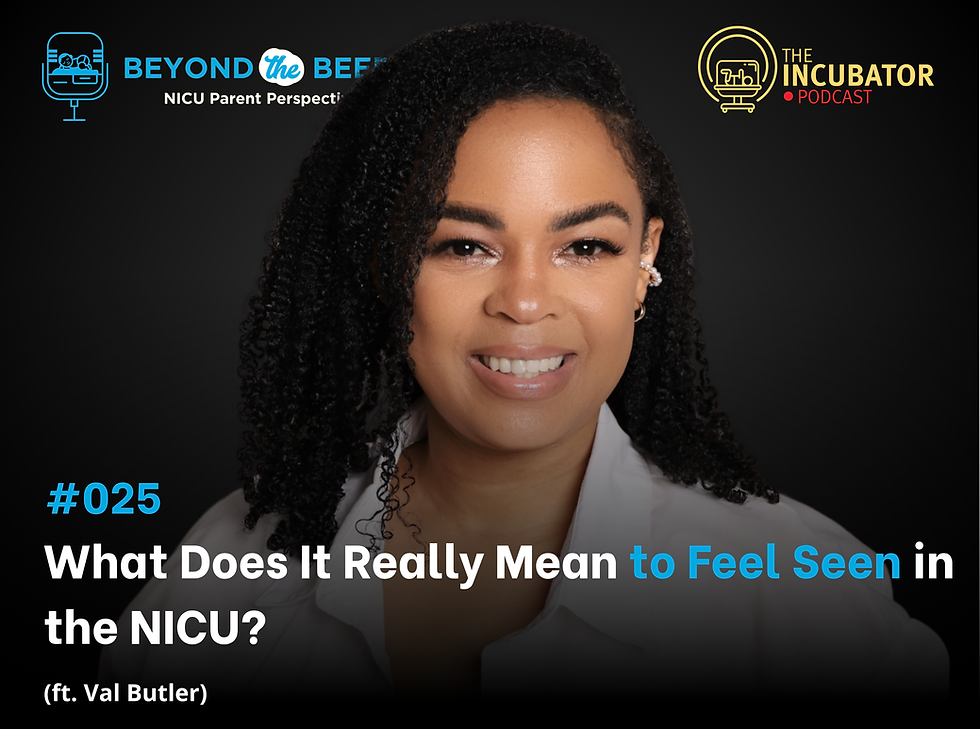
Your patient's twins were just diagnosed with twin-to-twin transfusion syndrome. Do you know what the next six months actually look like for that family? On this episode of Beyond the Beeps, Leah sits down with Lisa Zahakos, physician assistant, mother of identical twins Peter and Maurice, and founder of Heart Reserve, for a raw, detailed walk through a TTTS pregnancy, fetal laser surgery, and a NICU stay that redefined how she understands medicine. Lisa shares what it means to be spoken to "like a mom, not a provider," why she couldn't breastfeed despite everything she tried, and the overlooked long-term cardiac risk factors every NICU parent, especially of twins, needs to bring to their own doctor.
Link to episode on youtube: https://youtu.be/1cnHLmd1onY
----
Short Bio: Lisa Zahakos, PA-C, is a physician assistant, mother of four, and founder of HEART RESERVE. Her identical twins, Peter and Maurice, were born at 28 weeks and 5 days following a pregnancy complicated by twin-to-twin transfusion syndrome and fetal surgery. Their NICU journey changed her understanding of medicine, motherhood, and advocacy. Through Peter and Maurice’s blog and HEART RESERVE, Lisa shares her experience to support families and help women carry their own health stories into conversations with their clinicians.
----
The transcript of today's episode can be found below 👇
Leah MG Jayanetti (00:01)Welcome back, everyone. This is episode 27 of Beyond the Beeps, and we're so glad to have you with us today, whatever day you might be listening or watching. Today I wanted to talk about phases in the NICU (Neonatal Intensive Care Unit). We see a lot of things that bring babies to the NICU — meconium aspiration, congenital diaphragmatic hernia. We have 23-weekers, 25-weekers, 32-weekers, full-term babies. We're currently in a twins phase here in the country — probably twelve or fourteen sets of twins across just a few of the hospitals we serve. It is wild. And as you who listen know, or maybe you're a twin or multiple family yourself, having twins or multiples increases the risk of prematurity, growth issues, or coming to the NICU in general. We're also seeing a lot of what are called mono-di twins — twins sharing a placenta, which gives them an even more precarious start to pregnancy and life. And as timing, luck, fate, or whatever you ascribe these things to would have it, I got a message from our guest today, Lisa Zahakos, about this very thing.
The very wonderful Lisa Zahakos, a physician assistant (PA), mother of four, and founder of Heart Reserve. Her identical twins, Peter and Maurice, were born at 28 weeks and 5 days after a really difficult pregnancy complicated by TTTS and multiple fetal surgeries. Their NICU journey changed her understanding of medicine, motherhood, and advocacy, and through her blog, Heart Reserve, she's shared her experience and connected with other families navigating similar circumstances. This was wonderful timing — she came into my life while we're going through this so intimately in a lot of our hospitals. So welcome, Lisa, to Beyond the Beeps.
Lisa Zahakos (02:57)Thank you, Leah. Thank you so much for having me today. I'm so excited to be here.
Leah MG Jayanetti (03:14)As I mentioned in your intro, you're a PA, and I'm wondering how the transition from PA — because this is something we've talked about here before too — from medical provider to parent went for you.
Lisa Zahakos (03:28)Leah, that's such an incredible question. Hearing information when it pertains to your own child is a completely different ballgame. Words I'd heard over and over, like apnea, for example — hearing that word when it means your baby, living in a box, is not breathing, is very different. Sometimes I'd hear that word and not hear anything else after it. Coming from medicine, the only control I felt in the NICU was getting more information — that gave me a sense of control in a situation where you really have none. And every piece of information I got was harder and harder to digest. I think anyone delivering this kind of information to a parent needs to remember: you're not talking to a provider, you're talking to a mom, and that hits very differently. That person needs to be spoken to in the same language a mom would get, then asked — do you want more? Sometimes people would say one word and leave it at that, and I'd want more. Just asking, "Do you want more? Are you able to digest more?" Sometimes I'd need something repeated two or three times, because a word like apnea — to hear your baby stop breathing — is such a different context.
Leah MG Jayanetti (05:15)I love that you're saying that. It's something I've been doing a lot lately with our medical providers, because we have a lot who come through the NICU. On our side, as nurses and doctors, we don't want to insult them by talking down to them. So the way I've tried to solve it — tell me if this feels right — is I'll say, "I know you're a physician's assistant, but this is a really big change, so I don't want to assume you know what's going on. I'm going to talk to you like a parent, and if there's more I can give you, please let me know." How could we do better, as medical providers and NICU supporters, to engage with parents?
Lisa Zahakos (06:03)Leah, the fact that you're even asking that question is doing better. I think a lot of this goes so technical — we're people. That genuine honesty, treating someone like a human — I had one provider who just called me "mommy" all the time, and I looked at her and said, "My name is Lisa. Please just look at me like a person." I also don't think there's any field of medicine like NICU medicine. It's such a motherly type of medicine. Even if you're the head of heart surgery in the world, it's still different because of the specialty itself. My only advice is exactly what you're doing — recognizing it, thinking empathetically, remembering this is a person. It's not a chart, not a lab number — it's a human digesting this for their child. That's what a doctor is, right? That's why we should be in healthcare to begin with — because we care about people.
Lisa Zahakos (09:15)The best thing we could do as providers is treat people as human and authentically ask: what are you most comfortable with? Do you need more, do you need less? Be empathetic to their position, and treat them not as a number, but as a person — learn their name, treat them as you'd want to be treated. Back to basics. But thank you for asking that, Leah.
Leah MG Jayanetti (09:43)That was a really thoughtful response. I think it's something we're all tender-footed about, because it's such a delicate, intimate thing — motherly medicine. So I think the bravery has to be in asking how they prefer it — like, "Is it okay if I call you Lisa, or Mrs. Zahakos?" I love that. So — going from provider to parent, you already had two older daughters, and then you found yourself pregnant a third time, with twins. Tell me about that journey — help us get to the NICU from there.
Lisa Zahakos (10:32)Leah, this is a story. I planned every aspect of my life — two girls, two years apart to the day, a blonde and a brunette, like my sister. I almost had it — I'd check ovulation sticks, know the exact day. Then, after the girls were two and four, I finally felt like I had my life back. At the time my father-in-law was very sick, dying of cancer. And surprise — we got pregnant. I cried, I was petrified. I thought, my sister had three kids, I could do three. Then we went for our checkup, and surprise — they saw two. It was a huge shock, not something I'd planned. I'll never forget my husband looking at me and saying, "This is the best thing that could ever happen to us." And I said, "What are you saying? This is scary. What car am I going to drive? How do I push them in a stroller? I'm going to have four children under four."
Then we went for our first checkup, and they said Maurice, my baby B, was hanging off the placenta — he had a two-vessel cord, and he'd probably not be there when we came back. "You have twins — one is really small, the other's a little big. Don't be surprised if you don't have any when you come back." There was absolutely nothing I could do. Wait until 18 weeks and come back again. I couldn't accept that, so I went to another doctor, and they said the same thing.
Leah MG Jayanetti (12:34)And how was that — you'd already done the work to accept it, and then everybody starts pulling the rug out from under you. What was that experience like?
Lisa Zahakos (12:49)Medically, it made sense — two-vessel cord, very small. The reasoning was that if that one passed away, all the blood would rush from the bigger one, and the big one would pass too. So we went to the top of the top, and they started talking selective reduction — if we reduce baby B, that would save baby A. It wasn't presented as an option; it was presented as a necessity. On the last visit, their words were, "You should scrap the pregnancy and start fresh." That sat with me in such a crazy way, because this wasn't even planned, and I couldn't believe I'd get pregnant with these babies just to be told I wasn't meant to have them. So I started looking on Facebook. I joined every single group, every organization, and started posting and connecting with moms. One mother private-messaged me and gave me a doctor's phone number and said, "I can't promise you anything, but give this doctor a call."
Leah MG Jayanetti (14:04)So she opened up a tiny pinhole of hope where everyone else was shutting things down. What did that glimmer look like?
Lisa Zahakos (14:23)At the time, they were now saying there was also a cyst in the brain. For the big baby, they said the heart was shifted, the jaw was malformed. So now we were getting into genetic issues on top of it, but no further testing was done — no MRIs, no brain scans. They basically wrote me off — "you're older, twins have more issues." I recognized the doctor's name, because the staging system for twin-to-twin transfusion is named after him — the Quintero stages. This is a famous doctor, I thought — I don't even have the phone number to my own doctor, and I'm going to call him on a cell phone at night. And she said, "He's expecting your call." I was desperate — I would've done anything. So I called, and the way he spoke to me was different than any physician ever had. It wasn't fake hope — it was very logical and systematic. The first thing he said was, "You have two healthy babies — what are the chances you now have two with the rarest genetic conditions ever known? That's very unlikely." The second thing was, "We'll do all the concrete testing — fetal MRIs, fetal echocardiograms, meet with specialists."
Logically, it made sense: we'll do X, Y, Z, and then give you the reasons. At the time I thought I might be going there to end the pregnancy — I really didn't know. But he was the only one to give us hope. When I asked about the cyst in the brain, other doctors had gone straight to Dandy-Walker malformation — a neurological condition — instead of considering the cyst might be benign and disappear after 26 weeks, which it did. Why not give that glimmer, if it even exists?
So we ended up going to Miami. I told my husband, "I met this doctor online, a stranger gave me a phone number, I think we need to go to Miami." We don't live in Miami — we live in New York/New Jersey.
Leah MG Jayanetti (17:15)And you don't live in Miami, for those listening. So — a stranger with a phone number, and now you're going to Miami. This sounds like the beginning of a movie.
Lisa Zahakos (17:28)He booked a fancy hotel — I don't know what he was thinking, maybe he thought he was getting a good weekend out of it. But yes, we went to Miami, and that was only possible because of my family's support — my sister, who lives across the street, really stepped up.
Leah MG Jayanetti (17:55)So you come to Miami — sounds like some questions started being answered. What else did you hear from Dr. Quintero there?
Lisa Zahakos (17:55)The heart was off-axis but still within normal limits. Peter's jaw was fine, and the cyst — but we were starting to develop TTTS. The fluid levels become different — one baby has too much fluid, one has too little. The one with too little fluid, their kidneys basically stop working. The one with too much starts getting fluid on the brain and around the heart — so it creates risk for both children. Our levels were starting to go there, but weren't fully there yet, so he said, "Go home and come back." We went home, came back, he checked again, and said, "Still not there — go home, you might be able to stay in New Jersey." He referred us to a doctor named Jesus. I thought that was a very good sign — "if the doctor you want me to see is named Jesus, we'll follow up with Dr. Jesus." He stayed in contact with Dr. Quintero. The main thing about TTTS is that it can go from stable to very dangerous in days, minutes, even seconds.
Leah MG Jayanetti (19:12)How many weeks were you at this point, when you got sent back to New Jersey?
Lisa Zahakos (19:21)Eighteen — still very early. I had a friend who'd lost one of her twins to twin-to-twin transfusion, and she was the first person I spoke to when this started. She told me the signs — short of breath, belly shifted. Around 23 weeks, it happened. My uterus expanded so much it almost made my body think I was ready to give birth. I had full contractions, went to the hospital, and they told me it was false labor and sent me home. I said, "Please call Dr. Quintero — I know something's wrong." They did, and he said, "Have her here in the morning." He stopped my labor, gave me medication, and I flew to Miami — he was basically waiting to operate the second I arrived. Maurice was in a lot of distress — as they called it, "shrink-wrapped." His sac was so close he'd lost his whole profile. His kidneys had stopped working, he'd stopped producing urine — severe distress. The hospital offered to deliver at 24 weeks, or Dr. Quintero offered to send me to Miami. The other issue is that delivering babies at 24 weeks in this situation isn't a typical 24-weeker — you're delivering a baby already in renal and heart failure. So we flew to Miami.
Leah MG Jayanetti (21:02)So you made the decision, with Dr. Quintero's guidance, to do what?
Lisa Zahakos (21:12)Fetal laser surgery. They put in a tiny probe, and he separates the blood vessels connecting within the placenta — TTTS happens because the babies share connecting vessels in one placenta, so too much blood goes from one to the other. When he went in, he said, "Lisa, the vessels are so large, if I separate them completely, both babies won't make it. So I can't do the traditional surgery — I have to balance the blood flow instead." He went in and lasered the accessory vessels. You're awake during it, and I remember him tracing and saying, "This one looks okay, we'll do this one, this one we have to leave." This is a procedure he invented — super selective — and you don't know you need it until he's in there and can see the vessels. So another huge point I want to make: just because someone can do TTTS surgery doesn't mean it's simple — it's highly skilled, and you need someone capable of handling it if it goes outside the box. I'm so grateful I met Dr. Quintero. Just because a facility can perform the procedure doesn't mean it's the right place for your patient.
Leah MG Jayanetti (22:47)We're going to stay with details, then come back to emotions in a minute. Did you have to stay in Miami, or were you cleared to go back?
Lisa Zahakos (23:02)I ended up having complications afterward — we're not entirely sure what happened, but I needed oxygen and was in the ICU for a few days. They speculated it may have been a micro amniotic embolism — maybe some of mine mixed with some of theirs. For five days I was on support. Even after the procedure, I told the nurses, "I feel like I can't breathe," and they kept telling me I was having panic attacks. I said, "I'm not." My husband humored them and said, "Just give her the oxygen." The next morning, there was a team of ten doctors in the room — overnight, when they'd take the oxygen off, the fetal heart rate was dropping significantly. That was their sign I needed it. By the fourth or fifth day, they took the oxygen off, and Dr. Quintero said, "You need to get home to your other two children." He said, "You're ready." I don't know how I would've managed delivering there with the kids at home. He was a hundred percent right — I flew home.
Leah MG Jayanetti (24:51)Okay, so you got home — around 24, almost 25 weeks after the procedure. How did it progress from there?
Lisa Zahakos (25:04)We were celebrating, thinking everything was great. Then slowly the shortness of breath started coming back. I just knew my body — it felt different than just being pregnant with twins. People liked to tell me, "This is different, it's twins, this is how you're supposed to feel" — but I just knew something was wrong. Finally, at 28 weeks, we went for a checkup, and Maurice was again fully shrink-wrapped, and Peter's fluid was way beyond the level it was supposed to be. My husband said, "We have to call Dr. Quintero again," and I told him, "There's nothing now — these babies have to come out, this is it." He couldn't completely separate their vessels earlier — he'd only balanced the blood flow — so it made sense the condition came back after a few weeks. But in those two or three weeks, the kidneys were perfused again — Maurice was making urine again, the heart went back to normal. I really believe those weeks are what saved my babies. Taking a 24-weeker in severe renal and cardiac distress versus a 28-, almost 29-weeker who'd already had three solid weeks of recovery — I believe that's what saved my sons' lives.
Leah MG Jayanetti (26:49)So now we're at delivery day. Let's talk about the first time you saw them.
Lisa Zahakos (27:07)When they took the first baby out, they just flopped him onto my stomach and kept digging for the next one, so I thought the baby wasn't alive. What actually happened was they took Peter, the bigger baby, out first, and were digging to get the little baby out quickly because they thought he'd be in more distress. There might have been twenty people in the room — three NICU teams. It was completely overwhelming. Then I heard them say, "They're breathing, they're breathing, they're breathing." It was like hearing a miracle. I kept saying, "Just give me that breath — if you breathe, we will keep you alive." Then they wheeled me out, and there was the incubator, and a nurse grabbed my hands and said, "Come see your baby, touch your baby," pushing my hand through. It was surreal — he wasn't even a pound, not even the size of a ruler, and I'm reaching through, touching him. My first birth, the baby went right on my chest, breastfeeding immediately, it was beautiful. My second was an emergency C-section, still right on me. And then to experience this — I don't have the words. It was scary, it was joy. That was the first time I learned how those feelings could exist so connected — how such horrible fear and beautiful joy could exist in the same moment.
Leah MG Jayanetti (30:03)That's a truth we try to say out loud — these conflicting feelings can exist in the same moment: gratitude and grief, fear and hope, all at once. When that nurse brought you to the baby, was that still in the delivery room, or shortly after?
Lisa Zahakos (31:03)I don't know — I think I was being wheeled somewhere. I have a video of it, that first second touching him, my husband going, "Daddy, bring your camera, take a picture." It was just surreal.
Leah MG Jayanetti (31:20)I want to go back a little to talk about these feelings. You mentioned being a planner, information-driven, evidence-based. But there's another component you introduced me to — your storytelling. When did you start thinking, "I need to write this down"? This is the basis for Heart Reserve. When did it come to you that storytelling needed to be part of this journey?
Lisa Zahakos (32:42)When I read other people's stories, it was their stories that helped me, gave me hope, gave me faith. It's priceless information — not just how they got where they are, but what they felt. That connection kept me sane through everything, and I wanted to give that back, because I felt I'd been given a tremendous gift. If you look at the prognosis I was given from top hospitals, this shouldn't have been part of our journey. So I really believe the faith and hope that came from other people's stories — I feel an obligation to give that back. If I'm able to help another mother the way I was helped — I wanted to share that with my sons too, so they'd know how special their journey is, and I wanted them to know it in real time, not years later. Even in the NICU, I was able to share these stories and give other mothers the same gift we were given.
Leah MG Jayanetti (34:39)You were paying it forward. It's incredibly courageous and compassionate to share your story like this, because sometimes it's really hard to even think about our stories when they're so critical — sometimes we just want to crawl in a hole. So it's very generous and courageous.
Lisa Zahakos (35:06)We've been gifted with a beautiful story, and I know not everyone has this kind of ending, so yes, it's courageous, but I'm one of the lucky ones who gets to watch my sons walk, jump, run, play soccer. Most of the mothers who've created incredible foundations — like the TTTS Foundation — have gone through hell, most have undergone loss, and those are the ones I look at in awe, because their stories come from such a hard place, yet they've made such beautiful things out of it. I have to acknowledge them, because they change our lives.
Leah MG Jayanetti (36:10)For sure — and we skipped a big part of Peter and Maurice's life here. What was their NICU journey like, from such a complicated pregnancy — TTTS, fetal surgery — that alone is frightening, scary, uncertain?
Lisa Zahakos (36:41)Leah, the NICU journey made that earlier journey seem like a hop — nothing could prepare you for watching your sons grow in a box. The hardest part was learning how to be their mother. I knew how to change a diaper, give a bottle — but looking at this child, I was afraid to touch him. The first time they told me I could hold Peter, one of the nurses said, "He still has his umbilical line in — when you pick him up, you could knock that out, so be very careful even touching him." I thought, "Even my touch could harm them." So it was learning to be a mom in a position where you could hurt your baby doing basic things you wanted so desperately to do — like breastfeeding. I could not produce milk for the life of me — I had implants, had them out, new ones in, and I ended up taking them out since then, because I still can't believe I couldn't breastfeed my children. I'd pump for hours and get a drop of blood sometimes, and be so excited to give that. Our hospital had a milk bank program they offered me, so I tried so hard to connect and learn how I could be a mom even if I couldn't produce milk. That was so hard.
Peter came home after about 50 days; Maurice had a longer stay. That was beyond devastating. I found it harder, the healthier he got, the harder it was to leave him there. Those last two weeks were the hardest of my life, because at that point it was my son, and I knew I could care for him at home, and I became so visceral about leaving him there. When he's looking at me and smiling, my baby was three months old, and I was leaving him there — that was so visceral and painful. That was the hardest.
Leah MG Jayanetti (39:38)I'm really grateful you're bringing this up, because it's the story of multiples — when you have one a little ahead or behind the other. Once Peter was home, you couldn't bring him back to be with Maurice. How did you handle that, logistically, with two little girls at home and Maurice now a newborn?
Lisa Zahakos (40:21)Family support — I wave that flag. I am not someone who could do it alone, that's not my personality — I like the network, I know I need it. That's how I was brought up. My sister, who already had four kids, took my older two daughters. My parents moved into my house for the first couple of months. My husband had to go back to work — we needed that income. Peter had interventions set up from the time he left the hospital, doctor's appointments, his own issues still going on, so I needed someone there with him. And at the same time I had a three-month-old alone who'd smile when he saw me, so I needed to be there too. It's just — support. You don't have to do it alone. If there's any way you can reach out and say, "I need this" — a lot of people don't know how to ask, and a lot of people don't know how to offer, either. I'd be very verbal and say, "Please ask me about my children, it's my heart and soul." That was the only way I got through it — support, from family, friends, and strangers. My best friend was another mom I met through Facebook — we locked eyes once in Dr. Quintero's office, didn't see her again for a couple of years, then met up again. She was pregnant with twins, gave birth a week before me. I spoke to her every single day. Having someone who's living it with you — there's no way to put a value on that. So connecting with people going through the same thing, even through the internet — you'd be surprised how many people want to be there for you if you reach out, even to a stranger, and say, "It looks like your story's similar to mine, could we talk?"
Leah MG Jayanetti (44:11)It's true — it's a time to receive. Especially as moms who are charged with saving everybody, fixing everything, it's tough to turn to receiving. I love that you leaned into that. In your blog, you've written and shared so much — I wonder how storytelling helped you yourself, beyond paying it forward? How can folks release and process the way you do?
Lisa Zahakos (45:27)I'm not a writer — it's a stream of consciousness, not judged. Whatever my brain was thinking would just go down on paper. I wish, when I was in the NICU, I'd had more of a directive approach — like, what's happening now, what do I need to do next. So maybe something focused, taking things one day at a time. One step forward, two steps back, just getting through the day — sometimes just the hour. You can't look at the big picture — I found that so overwhelming. And we forget — when you're in that situation, you think, "This is the worst it's ever been." But if you have it written down, you can flip back and say, "This was a good day." Maybe that good day was an ounce gained, or maybe it was just that nothing bad happened. Seeing that on paper — being able to go back and read, "He was 700 grams," and now they're telling me, "He's not gaining weight, we're concerned," and I can say, "My son was 700 grams, he's two pounds now." That was a win. Finding those wins you sometimes can't find in the quick conversation you have with the physician. Just looking at them is so scary. So when you get scared to look at them, if you can look at that page with just one good thing on it, that in itself could give you hope. You need concrete things that can give you hope — that was one of mine.
I had the cribs put together during my pregnancy. I'd pass their room every day and picture them there. If I hadn't gotten to bring them home, taking down those cribs would've been one of the hardest things we'd have had to do — but visually seeing that gave me hope. Creating concrete, tangible pieces of hope — that's what carried me through.
Leah MG Jayanetti (48:53)This is golden, Lisa. Golden, golden, golden.
Lisa Zahakos (48:56)Well, thank you — it's messy.
Leah MG Jayanetti (49:01)But that's real, and it's very important. This is really beautiful and powerful, and I'm so grateful you're sharing it.
Lisa Zahakos (49:12)Thank you. It's also particular to me — I know a lot of people going through things who don't want to talk. For me, tangible pieces of hope is what gave it to me.
Leah MG Jayanetti (49:25)I feel so lucky to meet wonderful people like you. From your blog, you created Heart Reserve — a website, a whole being — and you have a forthcoming book of the same name, correct?
Lisa Zahakos (49:56)Thank you. Yes.
Leah MG Jayanetti (49:58)There's a quote on your website: "My story opens the door, yours guides what comes next." I think that's so powerful. You're talking about something we talk about a lot in the NICU — microchimerism — that when you're pregnant, your baby's cells basically become part of you. We know now they can test your baby's blood through yours, check if the baby's a boy or girl, or for genetic markers, just by drawing the mother's blood. I share with a lot of parents that your body is changed forever — if we pulled out your heart, we'd find your baby's genetics there. I hope that brings a whiff of comfort for our mamas who don't get to bring their babies home in their arms — that their baby is inside their body and heart forever. But it's something very important to our families, and you've done something extraordinary with Heart Reserve. Why did you create it?
Lisa Zahakos (51:45)Truthfully — I'm 45, and I don't feel like I did at 35, maybe a little more short of breath. I started thinking, maybe I need to get my heart checked. I started my career in interventional cardiology, so my brain always goes right to the heart. As I was researching, I saw the guidelines note that if you'd had gestational diabetes, preeclampsia, or twins — and I didn't know this — twins in general, or early menopause, these are now considered significant risk factors for developing heart disease. It's not just about carrying this history with you — it's about knowing it, because it changes the approach your doctor should take. For instance, the guidelines say Lp(a) [lipoprotein(a)] should be checked once in a lifetime. If I go in at 40 and say, "I had twins, I had preeclampsia" — maybe you'll go home with a 24-hour blood pressure monitor, maybe you'll get that Lp(a) test, maybe a nuclear stress test instead of a regular stress echo. It's knowing because you need to share this with your physician, and it will likely change how they evaluate you. Your history doesn't leave the NICU with you. The OB may not share these records with your primary doctor, because you might not even have one.
Most women don't know heart disease is the number one killer of women — more than all cancers combined. It's very important to carry this information from the NICU — not just about your baby, but about yourself, because it could change your management, possibly your life and health. I want Heart Reserve to be more of a concept of capacity — what will you be able to do at 80? You want to build up this reserve, not just prevent a heart attack. So please carry this history with you — just having twins in general is considered like having high blood pressure during pregnancy.
Physicians on the other side need to know the questions to ask too. I want to advocate for the patient to bring this to their clinician — instead of Googling or self-diagnosing, present what we need to present, and trust the doctor to do their job better. Working collaboratively — that connection is what will change medicine. That's why I built Heart Reserve — for myself, as a 45-year-old woman, in healthcare, not knowing this was a risk factor for myself. I was shocked, and I want to help people know this is something significant, and hopefully change the way we look at patient collaboration and advocacy.
Leah MG Jayanetti (56:12)That's outstanding — the collaboration, the advocacy. Your information matters too, how you felt — and it's fully expected for us to turn and look directly at our babies and forget about ourselves. That's where everybody says, "Don't worry about me, go with the baby."
Lisa Zahakos (56:56)I think our brains protect us. I remember my C-section with the boys — I don't remember having pain. With my second daughter's C-section, I couldn't walk for three months, but I remember walking up to the NICU saying, "I don't have pain." I think our brains physiologically protect us from thinking of ourselves, because so much needs to go to that baby. I think the physician also has a responsibility — maybe at discharge — to say, "Remember this is something you need to mention to your doctor." Advocacy sometimes sounds like coming at us aggressively, but it doesn't need to be that — it's a collaboration between us together.
Leah MG Jayanetti (57:56)It's communication.
Lisa Zahakos (57:58)Communication, and storytelling. I want women to get comfortable telling their story — to get help in the NICU, to connect with another mother. You don't know who needs to hear it. The first mother who told me about losing her child to TTTS — I never thought that story would be mine. I remember thinking, "That's not going to be my story," but it was. Sometimes things align in ways we can't make sense of — just be open to that.
Leah MG Jayanetti (58:35)Absolutely — and what's really great is, why we provide all our families with a journal and a guidebook: you don't know what you don't know. The beautiful thing I see in Heart Reserve is the appointment guide. I also really respect that you said don't "Doctor Google" it — take your questions to your doctor and talk it through with them.
Lisa Zahakos (59:26)Leah, if your community has any feedback on ways to make that better, I'd be so open to that — I want to make it as helpful as possible.
Leah MG Jayanetti (59:36)It's helpful — especially when we're going through something scary or uncertain. Having a guide, having someone to listen with you, advocate with you — that's really beautiful. So tell me a little about the boys today. What are they up to these days?
Lisa Zahakos (01:00:14)Well, God, Leah — it's crazy to look at them now, when I used to pray they could breathe, pray they could eat, not know if they'd walk. You get to look at everything as a miracle. I'll never forget that first Christmas — a friend gave me baseball bats engraved with their names, and it was the first time I thought, "My goodness, they could hit a ball one day." Today they play soccer, they run. The most incredible thing about them is the bond identical twins have — when people suggest things like selective reduction, or throw out terms without understanding... if that's the only option, I understand. But Dr. Quintero does a procedure where he laser-separates the little baby, so if that baby isn't going to make it, he gives them both an equal chance. This is a connection — identical twins — I've never seen anything so special. There could be a huge couch, and they'll lay on top of each other. Ask them what their favorite thing is, and it's, "Having my twin, having my brother." So as physicians, please acknowledge that connection — even just being able to put them in the same room. That was a huge NICU turning point for me. If there's a way you can do that sooner, that's a priority. When I was able to hold them both together, that was another beautiful moment. There was a shirt a mother friend in Kansas gave me — two pockets, elastic waist — I'd stuff them each in a pocket, and that was my skin-to-skin. So I don't know if there are programs for things like that in the NICU, but putting them in the same room, holding them together — twins have such an incredible bond, and there's no rhyme or reason to it, it's not genetic. Please keep that in mind — that connection is special, and do whatever you can to honor it, even if it's as simple as getting them in the same room sooner. That's a priority.
Leah MG Jayanetti (01:03:45)Absolutely, that's the truth. Well, Lisa, you've shared such amazing information, guidance, and support today. Is there anything else you want someone out there — who might be experiencing something similar — to hear or know?
Lisa Zahakos (01:04:14)Leah, I'm just so grateful for what you do with this platform. The most I could say is: share your story, about yourself, as much as you share it about your baby. You don't know who needs to hear it — it might just be you who needs to say it. I think people feel like technology is making us lose connection, but you could see it the opposite way — technology is allowing us to connect in ways we never could before. That's really the message I hope people take from this.
Leah MG Jayanetti (01:05:06)I love it so much. And if you could say what hope means to you — what is that?
Lisa Zahakos (01:05:17)It's just believing blindly in something that really doesn't exist yet — hope and faith. When every answer seems wrong, it's believing in something you don't have a reason to believe in yet — but trusting yourself, trusting your heart, and not giving up. You have to believe in whatever helps you believe, even if it's a tiny strand — the doctor's name was Jesus, hey, I'll take it. Looking for anything that could give you a glimmer — a butterfly flying by, a penny on the floor — believing in something bigger than just the logic in front of you. There's something more powerful happening than what we see in a lab test. It might be a stranger with a phone number on Facebook. That's hope. It's the small things, but you have to look for it, be open to it. Hope is openness — accepting the tiny, tiny things, just taking what you can get.
Leah MG Jayanetti (01:07:07)It's amazing, it's beautiful. Lisa, I'm super grateful to have met you, and I look forward to spending much more time with you as our lives move on. If you're out there right now — pacing the night, pumping, holding your baby at the bedside, waiting to hold your baby for the first time, especially our multiples and twin parents, and those who've experienced twin-to-twin transfusion syndrome — Lisa and I want you to know: undeniably, you are not alone. Take gentle care, everyone.


The content was truly engaging and informative. I sincerely appreciate you for sharing such valuable insights. You made an excellent point, and I completely agree with your perspective. Thank you for contributing this helpful information. Dumb And Dumber Suits
I really enjoyed reading this content. Thank you for providing such unique and useful information. Your point of view is excellent, and I fully agree with what you've shared. Thanks for sharing your thoughts with us! Martha May Whovier Costume
This is an insightful and informative discussion about the challenges of TTTS and the importance of specialized medical care for affected twins. It’s valuable to learn about the expertise and teamwork involved in supporting families through such complex situations. For those exploring seasonal costume ideas, a black cloak for halloween is a classic option for creating a mysterious and timeless look.
Been browsing Poki Games when I need to unwind after long study sessions. They organize everything by category which makes it easy to find something that matches your mood. The multiplayer section has some surprisingly fun stuff too.
The discussion about taking the NICU journey one day at a time stood out to me. Lisa’s focus on finding small signs of hope shows how meaningful routines can become during uncertainty. Even something simple like choosing a US Open Tennis Shirt can provide a familiar moment amid difficult circumstances.